First, allow me to introduce myself. My name is Christopher Michael Escobedo Sr. I am a father of five and married to an Afghanistan War Veteran. When I was 15, a spirit visited me in my dreams and blessed me with a gift. Being raised by a father who didn't believe in or go to church, I turned from God, and I was blinded from my vision until 2016, when I was 35. I woke up to realize I had not told many people about my vision and the powers I inherited from it. I started to research God and learn about things I had never thought to question. First, God was never the name in the original text of scripture. Instead, the Tetragrammaton was used to name our creator with the letters YHWH. These letters are so interesting to me because they represent both male and female, while the name God means a male deity. The name Jesus was also made up in Aramaic, which Yeshua spoke, and does not have a J; instead, the son of YHWH was named Yehoshua or Yeshua. Next, I started to understand that Moses and Yeshua were both African, as that part of the world was known as Africa until Europeans renamed it the Middle East because it was east of Europe. This would mean that Yeshua was raised seeing Africans crucified throughout the countryside as a warning against pushing back against Rome. This is why Yeshua started a revolution against European supremacy over 2000 years ago. He told his disciples to sell everything and buy swords for all those who didn't have one. I learned so much that I was ready to become a priest, but when I told this to my European priest, he said that I couldn't become a priest because I had children. I was so confused that I prayed about it and was given a path forward. Before I could learn any more about our creator, I was to learn about my ancestors and my history. Chicanos are from the tribe of Issachar through our African lineage that once conquered Spain. We are a part of the chosen people the bible was written for. Our ancestors' history and future are written in that book. Before I could go another step towards YWHW, I was to learn about myself and where I come from. And so my journey of learning and teaching about Chicano history began. Here is what I understand about American history.
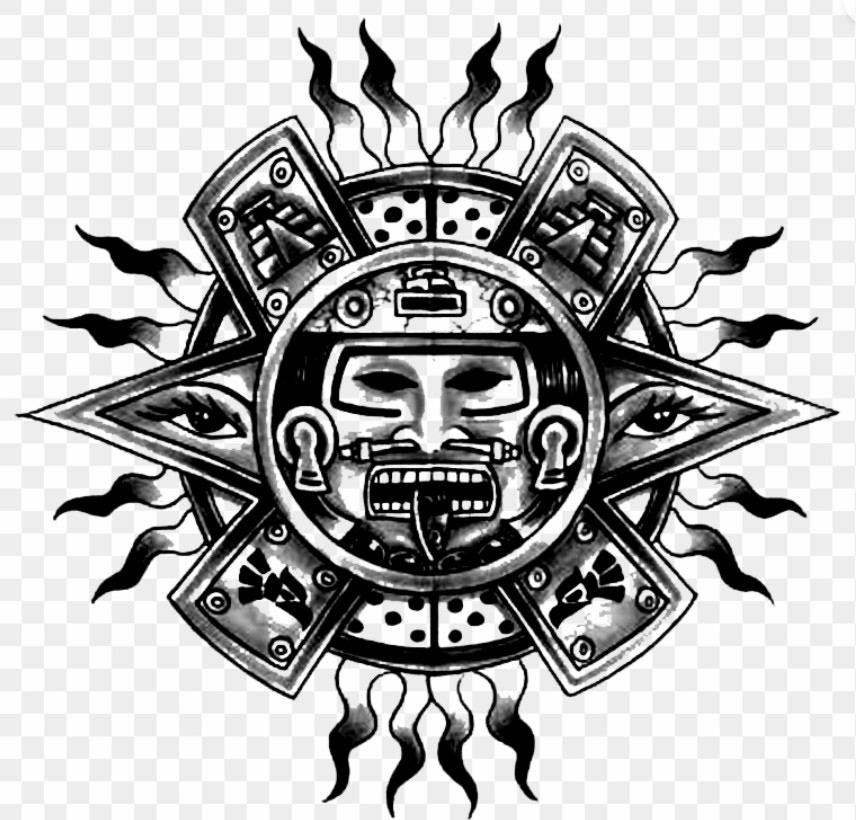
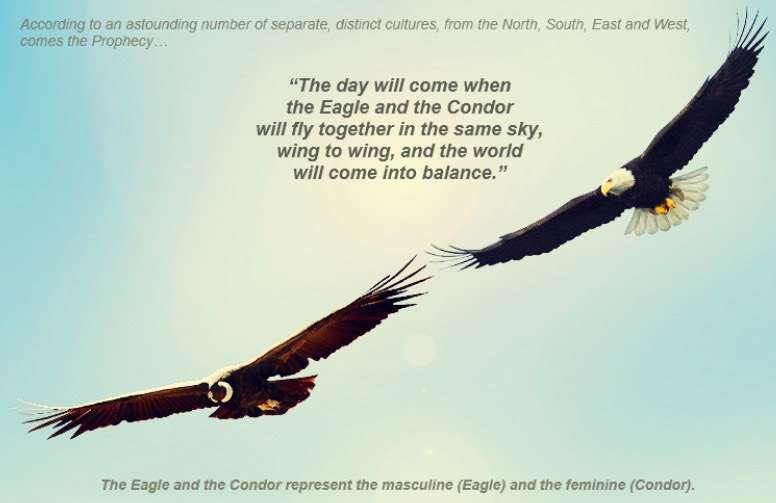
In the beginning, only the ocean, darkness, and monsters were created by Huitzilopochtli, Tezcatlipoca, Xipe Totec, and Quetzalcoatl, known as the four directions. When the Gods witnessed the chaos of the world and of Cipactli, they knew they had to change things. Cipactli was a giant sea monster crocodile that was so large it would feed on other creations. The four Gods of the North, East, South, and West decided that Cipactli needed to be destroyed because his appetite would eat all other creations. They pulled the monster in four directions, and the land, animals, and people poured out of its body, creating the world we know today.
As Chicanos, we are Indigenous Americans and are connected to many different creation stories across Turtle Island.
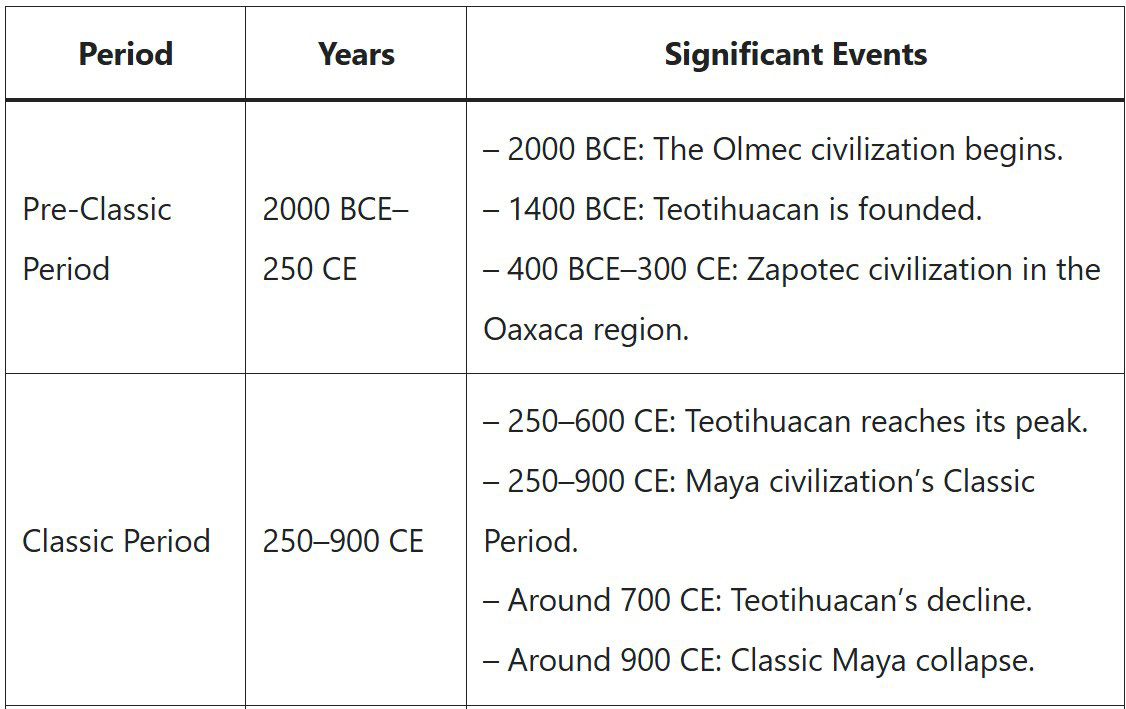
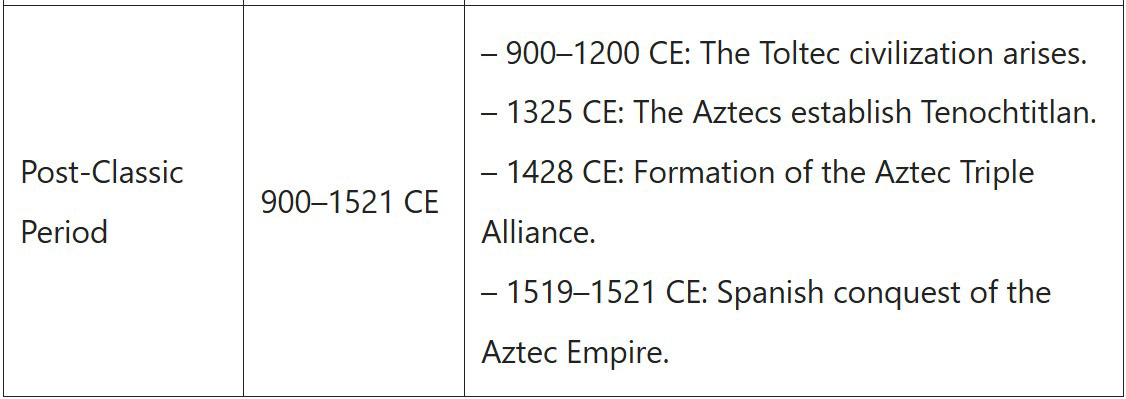
The story of Chicanos starts pre-Columbian, or before the Spanish arrived in Turtle Island, because Chicanos are Indigenous Americans. The Indigenous Americans had over 100 million people living in what we now know as North America when Columbus started genociding them in the 1400s. Fossils prove that people have existed on Turtle Island for at least 10000 years. This would mean our ancestors rode Woolly Mammoths during the Ice Age. Here is a timeline of our Ansestors from the Olmec to the Mexica tribe.
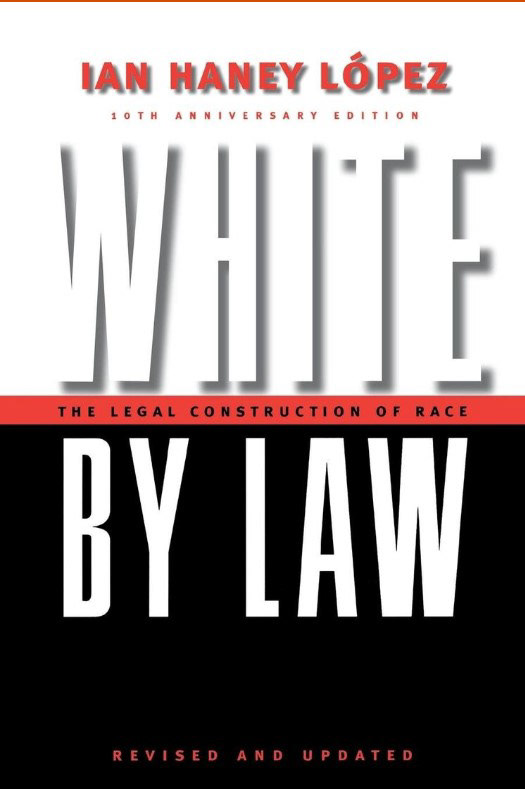
Since whiteness was the key to citizenship in the United States, Mexicans were referred to as white in the Treaty of Guadalupe Hidalgo after the Mexican-American War in 1848, where the United States coerced Mexico into giving them half of their land. Article 10 of the treaty said that Mexicans who were already on the land were supposed to be able to keep their lands. The United States government took this article out before ratifying it. The lands were systematically taken from Mexicans and given to Europeans. "In its first words on the subject of citizenship, Congress in 1790 restricted naturalization to “white persons.”1 Though the requirements for naturalization changed frequently thereafter, this racial prerequisite to citizenship endured for over a century and a half, remaining in force until 1952.2 From the earliest years of this country until just a generation ago, being a “white person” was a condition for acquiring citizenship" (Lopez 2006).
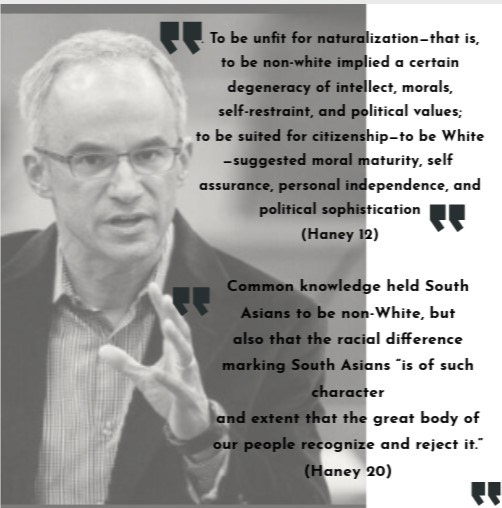
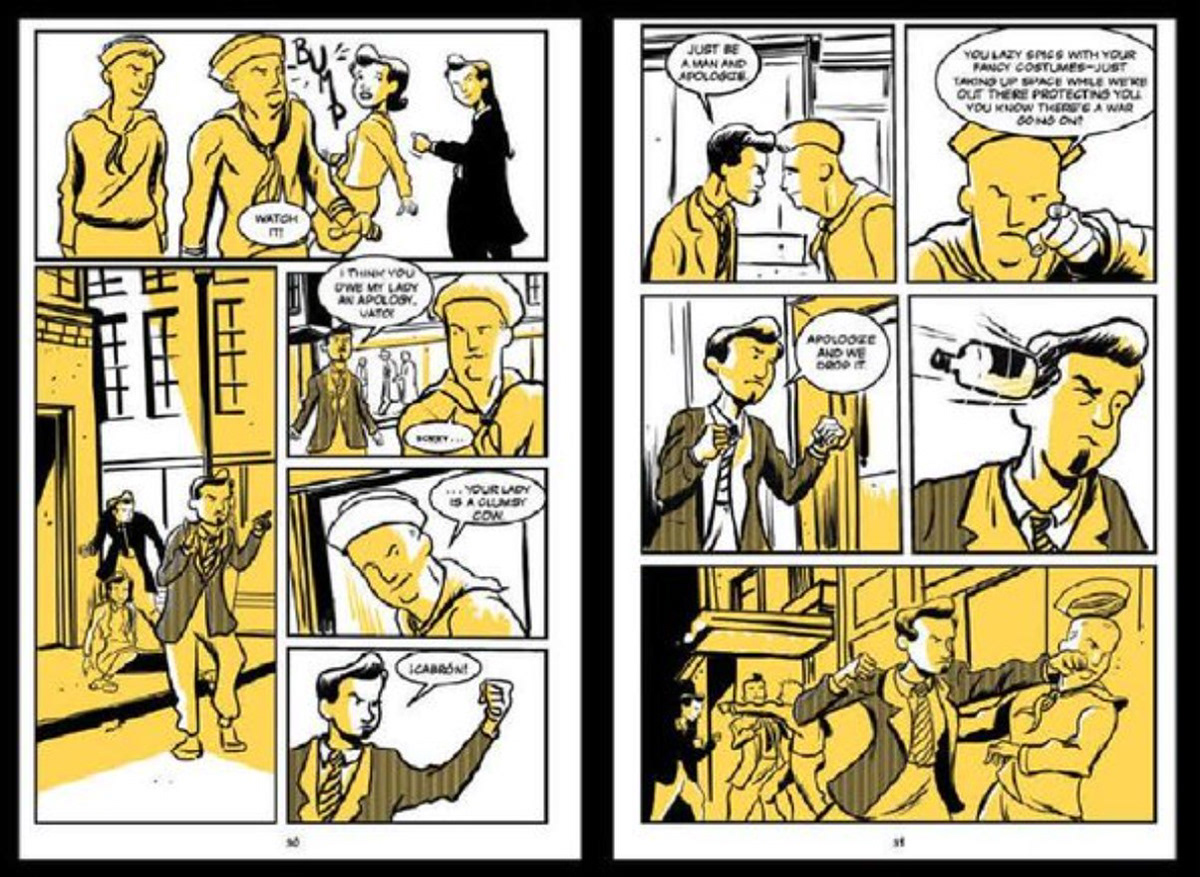
Since Mexicans were seen as white according to the law, this created a perfect storm of exploitation and prejudice.
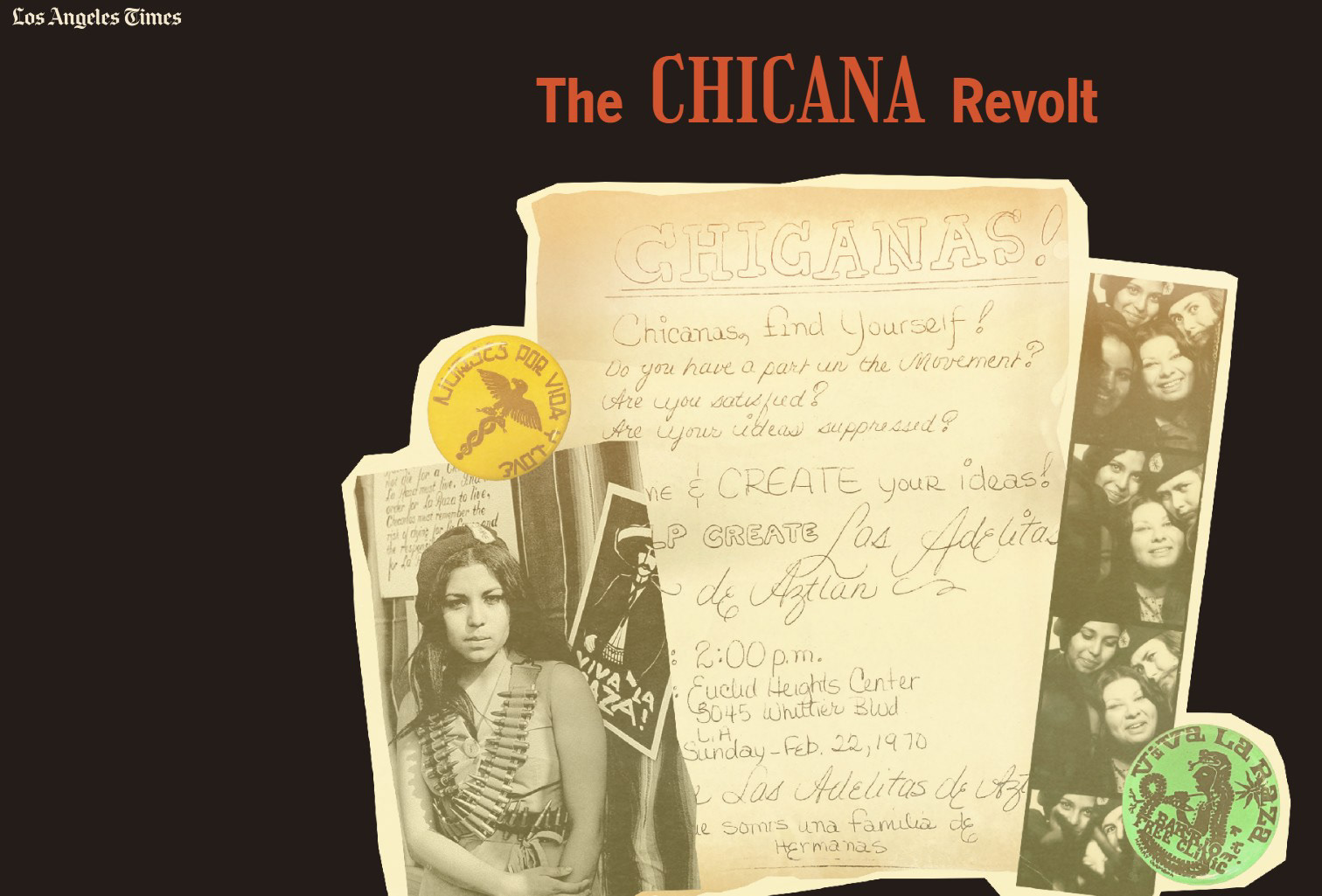
Copyright © 2007. University of Texas Press. All rights reserved.
The Chicano Movement and Cultural Citizenship
At the end of World War II, Mario Suárez returned from serving in the U.S. Navy to find that the barrios of Tucson where he had been born and raised had barely changed. In a short story he wrote in 1947, Suárez compared the El Hoyo barrio to capirotada, a traditional Mexican dish made with a base of “old, new, stale, and hard bread.” One could add any number of ingredients, including “raisins, olives, onions, tomatoes, peanuts, cheese, and general leftovers,” and then season it with “salt, sugar, pepper, and sometimes chili or tomato sauce.” The dish would be topped off with tequila or sherry and baked so that the ingredients melted together. Each family made the meal in its own way, varying the recipe from day to day. “While in general appearance it does not differ much from one home to another, it tastes different everywhere. Nevertheless it is still capirotada. And so it is with El Hoyo’s Chicanos.” Explaining the metaphor, he said, “While many seem to the undiscerning eye to be alike, it is only because collectively they are referred to as Chicanos. But like capirotada, fixed in a thousand ways and served on a thousand tables, which can only be evaluated by individual taste, the Chicanos must be so distinguished.”1
Suárez, the son of immigrants from the Mexican border states of Sonora and Chihuahua, is recognized as the first writer to use Chicano in a published work to refer to ethnic Mexicans. Mexican Americans themselves had generally used the term in a derogatory manner to refer to the poorest class of ethnic Mexican workers. Suaréz used it in a new way to challenge stereotypes and celebrate the diversity of the ethnic Mexican community. He implicitly criticized the romantic image of so-called Spanish Americans promoted both by Arizona boosters and by certain Mexican Americans themselves, writing that “it is doubtful that the Chicanos live in El Hoyo because of its scenic beauty.” Finally, he suggested that loyalty to the United States did not require that Chicanos abandon their reverence for Mexico. “On Mexican Independence Day,” he explained, “more than one flag is sworn allegiance to.”2
His stories about Chicanos were a tribute to the border culture of south-central Arizona. In the decades that followed, ethnic Mexicans began to build upon this cultural identity as a source of pride and strength. For many, U.S. citizenship no longer required the rejection of one’s cultural or ancestral connections, whether or not they referred to themselves as Chicanos. Activists in the 1960s and ’70s generally moved away from the integrationist politics of the 1940s and ’50s, having come to resent the notion that full political participation required the adoption of Anglo standards of national belonging. Instead, they promoted cultural pride and used more confrontational tactics to achieve their goals.
The Chicano and farmworker movements in Arizona, which were closely related, were not simply imported from other states, as some scholars have suggested or implied.3 Arizona’s Chicano movement was distinct from those in other communities such as Los Angeles, South Texas, and Denver in its relative absence of separatist sentiment and its deep connections to the state’s history of labor activism in the mining towns.4 One of the few scholars of Arizona’s Chicano movement has characterized its goals as “militant integrationism” rather than nationalism.5 Arizona activists, however, did not attempt to integrate simply through militant means nor, conversely, to form a separate community or nation. Instead, they tried to change the very culture and meaning of American citizenship by celebrating their distinct language and cultural heritage while simultaneously demanding full membership in the body politic.
Borrowing from William V. Flores and Renato Rosaldo’s idea that cultural citizenship may be defined as a “process that involves claiming membership in, and remaking, America,” this chapter examines how Chicano activists in Arizona went beyond a struggle for legal inclusion to engage in a cultural and political struggle for dignity, identity, “belonging, entitlement, and influence.” Arizona presents an interesting case study because of its large indigenous population. The Chicano emphasis on indigenous rather than Spanish roots had the potential to provide an impetus for Chicano-Indian cooperation. Arizona thus tested whether the Chicano movement’s ideology of indigenismo could provide a foundation for true interethnic coalition building (discussed here and in Chapter 8).
origins
Arizona’s Chicano movement—more accurately, its array of interconnected movements—emerged gradually through a dialogue between old and new activists from Arizona and other southwestern states. It was rooted, in part, in the state’s long tradition of labor activism in the mining towns. Arizona activists also retained a central focus on citizenship rather than separation, though they attempted to revise what it meant to be a full member of the body politic.
In the mid-1950s, old forms of collective action began to evolve through new interstate connections. In 1956 César Chávez and Fred Ross, who were members of California’s Community Service Organization (CSO), were in Phoenix to organize barrio residents and register voters. Chávez had been born in Arizona and so was familiar with the plight of Mexican Americans and farmworkers in the state. Ross, too, was familiar with Arizona, since he had worked there in the 1930s with the Farm Security Administration. Once in Phoenix, Ross and Chávez located Manuel Peña, one of the community’s most respected leaders, who had helped to desegregate schools in Tolleson a few years earlier. Peña became head of the state’s first CSO branch.7
The CSO built upon older forms of activism such as voter registration and citizenship training, while using new, more intimate and versatile strategies that, in their ideal form, allowed local communities to define their own needs and agendas. In certain respects, CSO leaders echoed the rhetoric of earlier organizations such as LULAC because of their focus on voting and citizenship training. A CSO pamphlet that asked “What makes a nation indivisible?” answered thus: “Citizenship, with its assurance of protection of home and family when it assures justice and a voice in the government.” The CSO also moved away from earlier, assimilationist models of organizing. Whereas Vesta and LULAC had focused almost entirely on the concerns of U.S. citizens, the CSO actively recruited immigrants. It also defended the interests of Mexican nationals by contesting, for example, the mass deportations during Operation Wetback in 1954. Finally, it conducted citizenship and health training in Spanish as well as English and encouraged local communities to identify the issues most important to them, rather than imposing a top-down agenda.8
CSO activists from California provided crucial training for future leaders of Arizona’s farmworker and Chicano movements. As Manuel Peña re-membered, with the help of Chávez and Ross, he and the Phoenix CSO initiated “projects for learning English, becoming citizens, improving neighborhoods, and registering to vote.” Between September 12 and the closing of voter registration for November elections on October 1, 1956, they signed up 1,556 voters in Phoenix barrios. They also held a series of house meetings to discuss the CSO and to determine which issues Arizona’s ethnic Mexicans felt were most important. Soon, CSO chapters emerged throughout south-central Arizona, in Tempe, Mesa, and in the rural towns of Casa Grande, Chandler, Coolidge, and Glendale.9
The Yaqui/Mexican-American town of Guadalupe serves as a good example of how CSO-style politics functioned and how CSO activists attempted to keep local needs and goals at the forefront. In 1960, Guadalupe was typical of other rural, farm worker communities in South-Central Arizona. It lacked basic services and infrastructure, had no sewer system, paved streets, stop signs, or garbage pickup, and a single county sheriff’s car serviced the community of about five thousand.10 As an unincorporated town, it had no access to state or federal aid for cities, to state or federal revenue sharing funds, or to state sales and gasoline taxes. By the mid-1960s, according to one researcher, seventy-nine Yaqui families, along with thirty-three families of varying indigenous origins (mostly O’odham), lived on the original 40-acre site that had been placed in trust for the Yaquis in 1914. About ten Mexican-American families also lived on what had become known as the forty acres, but most lived either in the newer neighborhoods on the town’s outskirts, or in the 92-acre Biehn colony, still held in trust by the Presbyterian Church. Mexican Americans made up about two-thirds of the local population.12
The Catholic and Presbyterian churches, which had long served as important meeting places for Yaquis, O’odham, and ethnic Mexicans, were catalysts for interethnic coalition building. In June 1960, Father Fidelis Kuban, a member of the progressive Arizona Council of Churches’ Migrant Ministry, invited Lauro García, a student at Arizona State University, to move to Guadalupe to teach catechism classes and to help organize community members to address problems related to poverty, unemployment, and a lack of health care.13 García helped establish the Guadalupe Health Council shortly after his arrival. Members of the council cleaned and painted the local health clinic and lobbied the county to double the number of monthly clinics to two. Soon they expanded their activities into politics. In 1962 there were only 180 registered voters in Guadalupe partly because of the state’s literacy test and the absence of a local polling place. The health council gathered enough signatures to create a new Guadalupe precinct, dedicated in June of that year.14
As the health council began to have more influence in the community, the minister at the local Presbyterian church contacted Fred Ross in order to enhance existing organizing efforts. When Ross arrived in Guadalupe in April 1964, he located community leaders associated with the health council and the Young Christian Workers, including Lauro García. He arranged a series of house meetings so residents could voice their opinions on community problems.
Women were instrumental in these early efforts. They played a central role as hosts of the house meetings, bringing their experience as homemakers and community caretakers to politics, while bringing politics into their homes. Esther Cota recalled that she and other women associated with the Young Christian Workers helped compile a list of grievances related to the safety of their homes and their neighborhoods. Women also worked alongside men as voter registrars, increasing the number of voters to 715 from 180. Ross accompanied Lauro García to visit a county supervisor to explain how many voters had registered. As a result of that meeting, according to García, Guadalupe soon received funding for a resident deputy sheriff, and the county began to install pavement and stop signs on the main roads. The health council then changed its name to the Guadalupe Organization (GO) to reflect its increasingly broad political and economic goals.16 Guadalupe thus served as a small but important example of inter-ethnic, grass-roots organizing between Yaquis and ethnic Mexicans.
The CSO was not alone in inspiring grassroots activism in Arizona. The American Coordinating Council on Political Education (ACCPE) also grew out of a combination of homegrown and out-of-state influences. It began as a local branch of the interstate Political Association of Spanish-Speaking Organizations (PASO) founded in Victoria, Texas, in 1961. In Texas, PASO paid the poll taxes of Mexican Americans, registered voters, and worked with the Democratic Party to campaign for Mexican-American candidates. José Angel Gutiérrez, who would eventually become the leader of the Raza Unida Party in Texas, has suggested that PASO’s efforts in the summer of 1962 represented “the beginnings of Chicano power.” As a young man not yet of voting age, Gutiérrez was drawn to PASO because it “stated up front that the group was political,” because its name expressed pride in the Spanish language, and especially because “they spoke of gringo injustice and implored us as Chicanos to do something about it.”
PASO took on a more moderate form in Arizona. Hoping to extend its influence beyond Texas, it held its first interstate meeting in Phoenix in 1961, inviting leaders from the city’s Vesta organization, the Alianza Hispano Americana, and local chapters of LULAC and the CSO. Carlos McCormick of the Alianza became the executive secretary of PASO, and
Eugene Marín became one of four local vice presidents. Marín and others instilled Arizona’s branch with a different agenda and ideology than the Texas branch had, reflecting their belief in self-improvement and accommodation—ideals that Marín had first promoted through Vesta. Arizona organizers soon decided to change the name of their local chapter to the American Coordinating Council on Political Education, in part because they did not agree with the priority PASO placed on preserving the Spanish language and engaging in confrontational politics. Marín became the ACCPE’s president. Speaking to the U.S. Civil Rights Commission in 1962, he described the council’s strategy as a “program of intense political education” intended to “give these citizens broader perspective and higher aspirations to compete in all of the fields of endeavor in our country.”18
Arizona’s ACCPE thus turned away from PASO’s emphasis on reinforcing Chicano culture and language. Its leaders endorsed political candidates, just as PASO did in Texas. Marín, however, felt that Mexican Americans had to change themselves more than Arizona’s political culture. In the process, he argued, they would improve the public image of Hispanics and earn acceptance as equal U.S. citizens. He declared, “Neither Phoenix, nor this Nation, can any longer afford the luxury of second-class citizenship. Our survival as a free society is being tested on this very point.” To emphasize the importance of citizenship training, the ACCPE adopted the slogan Helping to Make Citizens Citizens.
For a brief period, the ACCPE was successful in helping elect Mexican-American candidates. Tapping into existing networks such as Vesta, the Alianza Hispano-Americana, Viva Kennedy clubs, and labor unions, the ACCPE expanded to about twenty-five hundred members in ten different chapters throughout the state. Marín personally traveled from town to town to help establish many of these locals, having come to the conclusion that Mexican Americans were “being used” by both the Democratic and Republican parties. Still, rather than form an independent party, the ACCPE worked to influence the two-party system from within.20
Chapters of the ACCPE evolved into unique variations depending upon the cultures of local communities. In the mining town of Miami, for example, union members worked with the nascent local chapter of the ACCPE to run a slate of Mexican-American candidates to the town council. The new chapter became an amalgamation of the ACCPE and of preexisting networks associated with the mining unions. Immediately before the ACCPE arrived in the community, a police officer had beaten a Mexican-American resident. As Otto Santa Anna, a member of the Teamsters Union, later explained, “Police brutality, intimidation, and violations of one’s civil rights was the order of the day in 1962, the beating this man took was the last
straw.” Because of a history of intimidation and voting restrictions, Santa Anna found that “we first had to convince the Hispanic that the right to register to vote was guaranteed by the U.S. Constitution. Many knew this, though they also knew that opposition to local authority meant walking in fear of verbal or physical retaliation.” They managed to register 1,056 voters, and then ran a slate of six candidates, among whom were Santa Anna and the local union president. The ACCPE slate won three of seven seats on the council.21
By the mid-1960s, however, more and more Mexican Americans were voicing their dissatisfaction with the assimilation strategies of the ACCPE and similar organizations. In the same year as the Miami election, a radio broadcaster in Phoenix, Grace Gil Olivarez, criticized ACCPE President Eugene Marín while testifying beside him before the Civil Rights Commission. Olivarez felt that Marín’s self-identification as Spanish American was a rejection of his Mexican heritage. In fact, she placed much of the blame for the continuing poverty and discrimination of the working class on middle-class Mexican Americans such as Marín. As she put it, “Person-ally, I feel that the Mexican Americans are to blame—that group of the Mexican Americans that has acquired a professional or semiprofessional status; that group that resents being called the Mexican American and claims they are Spanish American, Spanish-speaking, or of Spanish origin; that group that takes pride in saying that neither they nor their children speak Spanish, and are quick to admit this because they are ashamed of their heritage.”
Her comments reflected the opinions of a growing number of young Chicanas/os in the 1960s. Many felt that Mexican Americans who deemphasized their Mexican heritage and refused to speak Spanish implicitly accepted Mexicans’ lower status. As Olivarez put it, “By admitting that they do not speak Spanish they are admitting that being a Mexican is the equivalent of being inferior.” To the contrary, she asserted, the protection of Mexican culture was critical to the struggle for equality. Mexican Americans, she argued, should fight to preserve their “very rich culture,” rather than leave it behind in their struggle for full citizenship. “A failure to do so,” she concluded, is “harmful to this Nation or, should I say, ‘our’ Nation because, regardless of how anyone feels about us, we are American citizens.”
Ironically, even Olivarez partly based her claim for being fully American on her whiteness. As she said, “I sure hope this small group of prejudiced Anglos learn[s] to know us, and start[s] out by finding out what race we belong to. We happen to belong to the white race; yet we find people talking about Orientals, Negroes, whites, and Mexican Americans as if we were a race all by ourselves.” She did not mention Arizona’s indigenous population alongside these other racialized groups, perhaps because she feared reminding the commission of the Indian ancestry of most ethnic Mexicans. Not until later in the decade would a new group of young activists dispense altogether with this equation of whiteness with citizenship.24
Because the ACCPE and the CSO remained focused on citizenship, job training, and voter registration, many people who had begun their activist careers within these organizations grew frustrated with them and began to branch off to organize in other ways. The founder of Phoenix’s CSO chapter, Manuel Peña, followed in the footsteps of Fred Ross and César Chávez in California and abandoned the organization in 1963. Peña, like Chávez, felt that the CSO did not adequately address class issues such as wages, working conditions, and the right to bargain collectively. In the months that followed, he attempted to organize a farmworkers union in Maricopa County. Soon, however, he wrote to Chávez that after signing up 212 members, some of his union officers had undermined the effort through poor management. Frustrated, he turned to other issues in 1964, saying that “there just does not seem to be enough hours in the day to work at it.”25 Others took up union organizing in the years that followed. In 1965 the Migrant Ministry of the Arizona Council of Churches spearheaded a new labor organization from which a more effective unionization drive would emerge. That year Rev. Jim Lundgren of the Migrant Ministry applied for a grant from the Labor Department to establish the Migrant Opportunity Program (MOP). The federal government prohibited MOP leaders from union organizing as long as they received funding from the Office of Economic Opportunity (OEO). Instead, they provided adult education and job training to help farmworkers adapt to the changing economy and were soon operating in Maricopa, Pima, Pinal, Cochise, and Navajo counties. In May, MOP organized a training session in Tolleson at which Fred Ross and César Chávez were the featured speakers. They brought with them an ideology that challenged the limited role the program was permitted to take in offering aid to farmworkers.
While the Migrant Opportunity Program steered clear of direct union organizing, it provided early experiences for women and men who would become leaders in Arizona’s interrelated United Farm Workers (UFW) and Chicano movements. Carolina Hernández and Gustavo Gutiérrez attended the early sessions with Ross and Chávez and helped form the Stanfield labor organization, which provided basic services to farmworkers. In 1965 Gutiérrez made several trips to California where he observed the early stages of the famous Delano strike and participated in the 1966 Easter march to Sacramento. The march, with its combined symbolism of labor protest, folk Catholicism, and political empowerment, had a profound effect on him. After returning to Arizona, he continued to correspond with Chávez. His experience with the UFW made him grow increasingly frustrated with the federal guidelines that did not allow the Migrant Opportunity Program to organize a union.27
Gutiérrez and a number of other Arizona activists soon formed their own union. Working from Tolleson and utilizing CSO tactics, they held house meetings and walked door-to-door in rural neighborhoods and labor camps. Because Chávez and other UFW activists in California were absorbed with the five-year strike in Delano, they provided little direct help to Arizona’s organizers before 1969. They did, however, enlist activists such as Gutiérrez to participate in the nationwide boycott against grapes in Arizona stores which, in turn, inspired a growing number of Arizonans to become activists. The boycott and picketing also fostered new connections between rural and urban activists who were concerned with poor housing, education, political representation, and urban poverty.28
By 1968, a diverse network of Mexican-American leaders in Arizona formed a rough consensus that political inclusion, economic opportunity, and cultural pride were equally important, interrelated goals. Mexican Americans from around the state, including Lauro García of the Guadalupe Organization and Gustavo Guttiérrez of the UFW, among others, gathered for a meeting in Phoenix in January, which they called the “Statewide Consultation on Mexican-American Concerns.” Attendees agreed upon a list of fifteen needs. They prefaced the list by saying that “the entire community, especially Anglo culture, needs to understand the background, history, and culture of Mexican Americans, and to accept the culture and language, to the extent of becoming bilingual.” To achieve this goal, they pledged to promote an “improved self-image by Mexican Americans, lifting up cultural heritage to discover better self-cultural identity.” The statement suggested not only that ethnic Mexicans should preserve their own culture but that all citizens should work toward bilingualism and multiculturalism. Mexican Americans were now demanding that long-held cultural prerequisites for full citizenship be changed.29
The attendees went further, listing a number of very specific goals. To “overcome Anglo and English language bias,” they vowed to revise laws such as the Arizona literacy test (which remained on the books despite the 1965 Voting Rights Act) and a state law that prohibited bilingual education. With the help of external pressure from the federal government after the passage of the Bilingual Education Act, they paved the way for the first bilingual education pilot program at Phoenix Union High School in the fall of 1968. They also hoped to reform the Wagner Act to protect agricultural workers, while encouraging the development of new institutions to provide better job training and placement services. Finally, they called for better “indigenous leadership” by local Mexican Americans, cooperation among various Chicano institutions, “greater concern for youth,” counseling in Spanish for those seeking public services, and comprehensive health care for the poor.
There were, however, cracks in the consensus. One of the most forceful critiques came from a member of Phoenix’s LULAC chapter. Narcisa Espinoza criticized the patriarchal rhetoric of male activists at the conference, the relegation of women to the background in Mexican-American organizations, and the absence of specific references to women’s concerns in the list of needs. According to the conference minutes, only she broached the subject of women’s roles. As she put it, “Since so much of this reference has been made to the machismo I have not heard very much about the madrecita [a term of endearment for a mother]. After all, is this a forgotten role?” When she asked, “Can a woman become a leader?” there was no response from the mostly male participants, as recorded in the minutes of the meeting. The silence reflected a broader failure around the Southwest to acknowledge the distinct problems women experienced, and to permit women to speak out publicly for the Chicano movement.
Silence also greeted the possibility of reaching out to other ethnic groups. Only briefly did conference attendees mention the possibility of interethnic mobilization, but when they did, the discussion was infused with a contradictory spirit of resentment toward ethno-racial groups perceived to be favored by federal agencies. Polo M. Rivera at first seemed to offer a foundation for interethnic coalition building when he declared that the basic needs of Mexican Americans were “in reality no different than the Ne-gro or the Indian or any other disadvantaged group.” Rivera followed this up, however, by declaring that “war on poverty” programs were “biased toward Negroes” and were designed “to cater to and pacify” them. Mexican Americans, he argued, did not need to be pacified, as blacks perhaps did: “I can take you into neighborhoods in Phoenix and have you talk to people and they will tell you, ‘We do not want to get involved in riots; we are proud; we have a heritage; we fight for our freedom, we came here as settlers and explorers, we did not come here as slaves.’” Rivera thus echoed the political rhetoric common to Arizona’s Anglos that made one’s ancestors’ status as settlers or explorers a prerequisite for full citizenship, relegating those of presumably less noble or indigenous origins to second-class status. The comments did not bode well for interethnic coalition building.32
Other disagreements emerged when many of the same activists converged for a second consultation six months later. During that meeting, some attendees, including Lauro García, emphasized the importance of collective grassroots activism, while others, such as Eugene Marín, continued to stress education and self-improvement. Marín also raised concerns that identity politics might lead to the creation of “an apartheid system by ourselves and for ourselves.” Gustavo Gutiérrez of the UFW once again made a call for labor activism, and he was the only member of the conference to question the Vietnam War publicly. He also felt that education was important, but unlike Marín he argued that the educational system itself had to be seriously reformed to better serve a diverse society.
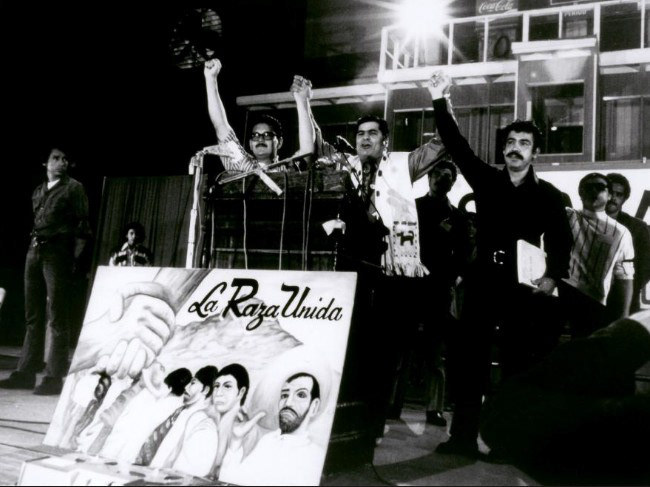
Finally, there was disagreement about political party affiliation. Some members sympathized with efforts in South Texas to create a third party called El Partido de La Raza Unida (Party of the United People/Race). Most, however, rejected the idea. Rev. Trinidad Salazar, for example, suggested that “if this movement, La Raza Unida, is going to become a political movement, well it is death because immediately there will be division.
. . . So La Raza Unida will become La Raza Desunida (disunited people/ race).” Most attendees expressed loyalty to the Democratic Party, although Marín, who would eventually declare himself a Republican, complained that many Democratic leaders “used the vote of the Mexican American as if they were a bunch of sheep.” At one level, then, the conference showed that much work had to be done to reach agreement over the direction of Chicano activism. And yet, from another angle, the meeting evinced a new vitality of debate among Mexican Americans—a debate that would spawn more assertive grassroots activism in the years to come.
The years 1967–1969 were pivotal to Arizona’s Chicano movement. In 1967, students at the University of Arizona formed the Mexican American Student Association; the next year, a group of Chicano students at Arizona State University formed the Mexican American Student Organization (MASO). Not long thereafter, activists from college campuses, the United Farm Workers, and Phoenix barrios began to meet in south Phoenix homes, forming the core of a new organization called Chicanos por La Causa (CPLC). Among the participants were Gustavo Gutiérrez of the UFW, Richard Zazueta of MOP, Lauro García of the Guadalupe Organization, and Alfredo Gutiérrez and Manuel Marín of MASO.35 These organizations would serve as the heart of the regional Chicano movement for the next several years. They would adopt new, often confrontational tactics to achieve their goals, while proclaiming more clearly than ever that cultural difference could serve as the basis for, rather than an obstacle to, full and equal citizenship.
The rise of these groups corresponded with the increasing urbanization of Arizona’s Chicano population. By 1970, fully 81 percent of Arizona’s Mexican Americans lived in cities, closely corresponding to the 82 percent of the Anglo population who did and far greater than the 29.6 percent of Indians who lived in cities. (In considering why Chicanos and Indians tended not to organize together, this demographic disparity is important.) Urbanization resulted in new opportunities in work and education. Mexican-American men in cities became twice as likely to work as professionals (from 3.5 percent to 7.5 percent) and were nearly three times as likely to have clerical jobs (3.7 percent to 9.1 percent). Women experienced similar changes in employment, surpassing men in acquiring professional jobs, largely as teachers. Male urban professionals and clerical workers earned a median income of $8,559 and $7,516, respectively, significantly higher than the average of $3,413 in rural areas and $4,766 in the mining towns.36
Beyond seeking more skilled and better-paying jobs in Phoenix, Tucson, and their satellite towns, many young people moved to the cities to attend universities and community colleges. In general, education levels among urban Chicanos substantially surpassed those in rural towns and farm areas. Chicanos in the cities completed, on average, 9.7 years of formal education, one year more than those in smaller towns and three years more than those who lived and worked on the regional farms. The differences for women were not as great but were still significant. Urban Chicanas attended school on average for 8.8 years in the city, as opposed to 7.9 in regional farming areas. More dramatically, Mexican Americans in urban areas (Phoenix and Tucson) were twice as likely to attend college than were those in rural areas.37
Maricopa was Arizona’s most populous county, and by 1970 it had the largest ethnic Mexican population (140,607) in the state, surpassing the combined populations of ethnic Mexicans in the three other counties in south-central Arizona—Pima (82,667), Pinal (24,813), and Santa Cruz (10,792). Phoenix was both an agricultural center and an urban metropolis, and thus the ideal arena in which to examine the connections between the urban and rural movements and to explore how the diversity of the Mexican-American population impacted the cultural and civil rights struggles of the era.
Young men and women from the mining towns had much to offer their urban counterparts in Phoenix, particularly as union organizers. Alfredo Gutiérrez, for example, frequently attended union meetings with his father while growing up in Miami before he moved to Tempe to attend Arizona State. He recalled that “there weren’t classes in union organizing, there wasn’t indoctrination, but the whole town was an organizational tool.” Growing up in a mining town helped to prepare him to become a campus activist. “You understand at a very young age why you were striking, why you didn’t cross the picket line,” he said. Other Chicanos, including Geneva Duarte Escovedo and Manuel Marín, also credited their experiences in the mining towns for their early education as activists. Joe Eddie López, a Phoenix native who would work closely with these newcomers from the mining towns, felt that “los mineros became among the articulate leaders” of the Chicano movement. “It was destined to happen,” he explained, “but how long it would have evolved . . . it may have been a lot longer in coming.”39
Chicano students at Arizona State were also influenced by activists in Tucson and from outside the state. In 1967, Sal Baldenegro led Chicanos at the University of Arizona to form the Mexican American Student Association. Baldenegro had lived in Los Angeles while attending El Camino College; he had returned to Tucson with a commitment to start an organization similar to those he had observed in California. Soon thereafter, in 1968, Alfredo Gutiérrez helped to organize the Mexican American Student Organization (MASO) at Arizona State.40 Among the other early leaders were Arturo Rosales, an Arizona native and veteran who already had experience with the UFW, and Ed Pastor, who, like Gutiérrez, had grown up in the mining town of Miami. Gutiérrez later estimated that 90 percent of Arizona State students who initially decided to form the chapter of MASO “were from mining towns.” Pastor remembered that their familiarity with labor unions allowed them to feel “very comfortable with the idea when people were talking about organizing at ASU.”
Not surprisingly, students from the mining towns initially focused their attention on labor. On November 20, 1968, MASO members wrote a formal letter of grievance to the administration at Arizona State, asking for a cancellation of its contract with Phoenix Linen and Towel Supply because of its pattern of subjecting ethnic Mexicans to “racial discrimination, sub-standard wages and inferior working conditions.” The students pointed out that while 83 percent of those working for the company were Chicanos, “in the past 36 years one Chicano has been promoted to a supervisory position.” MASO worked alongside other campus organizations, including a local chapter of the Young Socialist Alliance (YSA), an offshoot of Students for a Democratic Society, to form the Student Coalition for Justice. The coalition jointly collected about five thousand signatures in support of their cause and then led three hundred students in a march on the administration building to meet with President G. Homer Durham. A week after a two-day sit-in, officials from the university declared that they would not renew the contract the following year. The apparent success of the protest rapidly raised MASO’s stature in the eyes of many students.42
Soon, MASO extended its activism beyond campus boundaries into Phoenix and the rural areas of Maricopa and Pinal counties. Alfredo Gutiérrez helped to organize urban laundry workers in Phoenix, and he and other student activists worked closely with UFW organizers such as Gustavo Gutiérrez. The students helped to set up pickets in front of Phoenix stores that sold Delano grapes. The MASO newsletter often put farm labor issues at the top of it's agenda. As one issue put it, “MASO has . . . pledged itself to continue helping the Huelga [the strike] in any way that it can and has recently cooperated with the newly formed Phoenix-Tempe chapter of the Friends of the Farmworkers organization. This organization is dedicated to helping with the picketing of stores and raising money for food for the striking laborers.” Their participation in the boycott persuaded the Arizona State Food Service to stop purchasing grapes.
Even as they helped to organize workers on campus and off, many MASO members expressed discomfort with the socialist and/or nationalist leanings of other campus organizations like Young Socialist Alliance (YSA) and Chicano student organizations in other states. Alfredo Gutiérrez, the primary founder of MASO, distanced himself from the rhetoric of more radical activists. In 1968, before MASO was formally established, Gutiérrez had invited San Francisco activist Armando Valdez to visit the campus and encourage Chicanos to become politically active. While Gutiérrez credited Valdez for helping to spur the movement, he later admitted, “I just couldn’t relate completely to his notion that Ho Chi Minh was a figure that we should emulate.” Arturo Rosales also recalled that many members were uncomfortable with nationalism and Marxism. As a result, in late November, only weeks after the victory over the linen contract, MASO voted 42–3 to dissociate from the YSA by dissolving the Student Coalition for Justice. Nevertheless, most members took from YSA a dedication to democratic principles and decentralization of leadership, and members of the two groups often found themselves participating together in future protests—especially as part of the movement against the Vietnam War. MASO activists asserted pride in Chicano culture, but for the most part they did so without invoking separatist language. Their central concerns remained racial inequities in the workplace, ASU’s poor record of admitting Chicano students, obstacles to political participation, and cultural pride. They arranged a Chicano cultural week and pressured the university to establish a Chicano studies program. Even when discussing cultural issues, however, most MASO leaders emphasized the need to change mainstream institutions to be more inclusive and pluralistic, rather than demanding the formation of a separate Chicano nation. As Arturo Rosales explained to a student journalist in 1968, “Through the Chicano studies program, the Chicano people themselves can become aware of their own position and achieve cultural pride, which has been robbed by a society where, if you are a Chicano, you are inferior.” When Arizona State refused to establish such a program, students grew less patient and more aggressive in their rhetoric. In 1970, a student activist suggested in an interview with the campus newspaper that “for years society neglected and raped our culture. This university has not allowed the barrio people and the Chicano students here to initiate or have any input into university programs.”
MASO’s goals were reformist rather than revolutionary, even if its tactics, including marches, protests, and sit-ins, were often provocative and confrontational. Still, it differed from earlier Mexican-American activism in Arizona with its greater emphasis on labor rights and culture. One MASO student conference featured workshops that encouraged the support of the grape boycott by harnessing what it called student power potential. Two faculty members from the Spanish Department spoke about preserving the cultural heritage of Chicano students, while Noel Stowe, a professor of Latin American history, spoke in favor of a Chicano studies program. Lauro García closed the meeting by discussing community organizing tactics among Yaquis and ethnic Mexicans in Guadalupe, elaborating on the strategies of earlier organizations like the CSO. García encouraged the students to follow similar tactics in the barrios.
In late 1968 and early 1969, as some organizers graduated, several Ari-zona State students and alumni decided to branch off from MASO in order to focus on issues of discrimination off-campus, and they soon began to work with activists in south Phoenix to form the core of Chicanos por La Causa. By April 1968, Joe Eddie López, a steamfitter and member of Phoenix’s construction workers union, Local 469, emerged as one of the primary leaders of the new organization. A diverse group of activists attended the early meetings. Participants elected Rosie López and Gustavo Gutiér-rez president and vice president, respectively, of the executive committee.49 An early CPLC proposal criticized the top-down approach of existing programs and argued that “to be effective, efforts must come from within the barrios.” Women and men alike played important roles in the CPLC, but as with many other Chicano organizations, it was the men who held the most visible positions as leaders and spokesmen. As Rosie López, who was married to Joe Eddie López, recalled, “We [women] did a lot of the work, we did the cooking and the calling. We did the mobilizing and the guys, once everybody was in place, the guys would get up there and speak.”50 Labor rights and urban living conditions occupied most of CPLC’s attention in its early months, reflecting the experiences of its members.51 Soon, however, a crisis at Phoenix Union High School turned attention toward the issue of education in inner-city schools. In August and September, a series of fights broke out between black and Chicano students at Phoenix Union (Anglos were a minority at the school). Members of the downtown and south Phoenix Mexican-American community met to discuss the issue, and CPLC took the lead in urging the school administration to resolve the problems that had led to the conflicts. When the administration did little, CPLC helped to organize a protest march on September 15. The march, involving about three hundred protesters, began at the Santa Rita Center, the home office of the CPLC, and ended at the Phoenix Municipal Building.
The protesters presented a list of nine demands to city officials. First, they asked for more security guards at the high school, “with equal representation from the Chicano community,” and that any student who infringed on the rights of other students be “promptly dealt with.” The other demands, however, focused on broad concerns related to general inequities in the school system and stressed the need to reform the curriculum to address cultural concerns. Although the high school had recently instituted a small, pilot bilingual education program according to the 1968 Bilingual Education Act, CPLC members felt much more had to be done. They demanded that the school hire more Chicano counselors and teachers (only one of eighteen counselors was Chicano) and that Chicano teachers be hired to teach in the Minority Studies Program. They created their own citizen’s curriculum committee to press for the implementation of the program. They also demanded that no student be faced with recrimination for participating in “Chicano leadership and social awareness.” They viewed all of these steps as part of a larger goal to ensure that Chicano students and parents be recognized as “first-class citizens.”
School officials fanned the flames of discontent with their lackluster and at times racist responses. Certain administrators explicitly blamed the problems Mexican Americans faced in the schools on the students and their families. A 1962 report by the superintendent of Phoenix Elementary School, District One, had listed four problems faced by “minority children.” These included their “cultural handicaps,” their propensity for speaking Spanish, the “tendency of minorities to concentrate in their own separate residential areas,” and the “failure of minority groups to recognize the importance of education.” None of the issues placed any of the blame on institutional segregation or on the schools themselves, creating little impetus for reform.54 Seven years later, as CPLC protested against Phoenix Union High School, little had changed. One month after the September march, Donald Covey, a consultant to the social studies program, echoed the earlier assessment that Chicanos had failed themselves: “Being oriented by passion and subjectivity, the Spanish-speaking person lacks continuity and perseverance in attaining the same goals as the man of action symbolized by the Anglo-American.”
Phoenix Union Principal Robert Dye dragged his feet in response to most of the demands by parents and students. Beyond agreeing not to punish students who had engaged in the protests, Dye addressed only the issue of campus security by saying, “If it’s security they want, it’s security they’ll get.” The mainstream press did not help matters, blaming the pro-tests on “racial strife” and reinforcing the widespread belief that the real problem was the tendency of Chicanos and blacks toward irrationality and violence.56 A flurry of newspaper editorials criticized the activists for engaging in uncivil protest. The Phoenix Gazette, for example, commented, “Demands which approach the force of ultimatums—the non-negotiable demand, for example—are avoided by wise and sober men for the reason that when the answer is no, there is nothing left but to fight or run.”
The response by school administrators energized parents and students to demand reformation of the school district from the inside out. Chicano students and community leaders organized a parent-student boycott committee and carried out a series of new protests and walkouts. They complained of “rotten curriculum, incompetent administration, and a lack of community involvement in policymaking decisions.”58 School administrators met on several occasions with representatives of the boycott committee, forming a citizens advisory committee to analyze problems. Once again, however, the only real solution administrators offered was to increase security. In response, Joe Eddie López ran in the 1970 election for the school board; he was defeated.
The Phoenix Union boycott propelled the CPLC into the center of Arizona’s developing Chicano movement. CPLC opened its doors to all members of the ethnic Mexican community, rarely engaging in the kind of separatist rhetoric that was common in organizations like the Crusade for Justice in Denver or the Centro de Acción Social Autónomo in Los Angeles. Rather than criticize those who refused to identify as Chicanos, CPLC leaders welcomed them, declaring that “Chicanos, La Raza [Unida], Mexican Americans, the Spanish-speaking—these are the people of Chicanos por La Causa.” By 1970, having gained federal tax-exempt status and financial support from the Southwest Council of La Raza, they developed separate branches to engage in barrio planning, housing improvements, economic development, and education. They also actively supported Chicano-owned businesses.60 To keep in touch with residents of the barrios, they held regular, CSO-style house meetings. They worked with the Department of Housing and Urban Development to provide more low-income housing and organized conferences to “help Chicano families better manage their financial and personal commitments in order to be able to buy their own home.” Their economic development division provided advice to develop a “sound economic base” for the Chicano community, conducting market surveys, feasibility studies, and financing assistance among other services.61
CPLC also initiated a variety of cultural programs. Its leaders were highly critical of mainstream, Anglo-dominated political culture and were “dedicated to supporting the Chicano community in its struggle to bring about systematic change in those institutions which continue to oppress Chicanos.”62 Indeed, its programs were designed not only to educate Chicanos to become good citizens but also to change the very meaning of citizenship and national belonging. The Barrio Youth Project, for example, which was started in October 1969, worked to “develop and implement creative and educational programs for and by barrio youth,” and to promote youth services and seminars. Alfredo Gutiérrez initially directed the program. Influenced by California’s farmworker and student movements, the youth project also helped youth write and perform their own brief actos (skits), including “satirical attacks on those institutions which have oppressed the Chicano community,” and reenactments of events important “to the Chicano culture and heritage.”
In October 1970, a year after the first protests at Phoenix Union, CPLC boycotted the school, condemning the lack of sufficient action by officials. This time the boycott committee demanded that Superintendent Seymour and Principal Dye resign. Half of the twenty-five hundred students at the school stayed home during the peak days of the boycott in October. Joe Eddie López warned that Chicanos would pull their students out permanently and establish their own schools if the administration failed to address their demands, and Alfredo Gutiérrez suggested that they would begin a recall of the school board. The CPLC received the endorsement of about one hundred teachers belonging to the Arizona Association of Mexican-American Educators and enjoyed direct encouragement by Chicano leaders from around the Southwest. At the height of the boycott, Corky González of Denver’s Crusade for Justice visited Phoenix to lend his support, and members of the Teatro Popular from UCLA read poetry and performed satirical skits.
Some school officials grudgingly acknowledged the need for reform. School board member Don Jackson cited the success of the pilot bilingual education program: while the average Chicano dropout rate for the district was about 20 percent, only 1 percent of the one hundred Chicanos enrolled in the bilingual program had dropped out during the previous year. Others, however, pointed out that bilingual education was not the only solution. At the height of the boycott, on October 16, Mexican-American educators held a bilingual education awareness institute in Phoenix in which Thomas Carter, a resident scholar at the U.S. Civil Rights Commission, gave a speech entitled “Way Beyond Bilingual Education.” He called it a “feeble first step,” stressing that the entire curriculum needed to be changed. “Any history that omits a realistic portrayal of the Mexican-American and Spanish involvement in past and present society is not only false but dangerous,” he explained. He then offered his own definition of American citizenship, suggesting that those who participated in boycotts, sit-down strikes, and marches were “citizens in the best democratic tradition of the United States and Mexico.” The comment earned loud applause from conference attendees.
The boycott lasted officially until November 2, at which time school officials agreed to cooperate in a study to be conducted by members of the parent-student boycott committee. In response, CPLC leaders backed away from the demand that the school superintendent resign.66 A new committee conducted an investigation of the school, and it issued its report in May 1971. The report emphasized the familiar theme that the schools “are unresponsive to the needs of these citizens,” and it offered thirty-seven specific recommendations. Among them were that counseling should be improved; students should no longer be tracked into vocational programs; security and other staff should reflect the “ethnic patterns of student population”; all written reports from school officials should be available in Spanish as well as English; teachers and staff should attend workshops on inner-city life; and the school should maintain an active dialogue with the community it served. When school administrators accepted the recommendations, at least in principle, CPLC activists agreed to stop engaging in mass protests. While it was unclear precisely when and how the recommendations would be implemented, CPLC had taken a step toward asserting its own definition of citizenship: it should be active, vigilant, participatory, and culturally inclusive.
As CPLC pursued its agenda in the barrios, MASO evolved as well. In March 1971 MASO changed its name to reflect its new affiliation with California’s Movimiento Estudiantil de Chicanos de Aztlán (MEChA). A trip to a Chicano student conference in Long Beach, California, in the summer of 1970 inspired the change. As Jerry Pastor, the co-chair of the new MEChA branch at Arizona State, recalled, “That summer we went to Long Beach, and that is where we heard about MEChA. We wanted to connect somewhere because the isolation was difficult here on campus. We felt we were vulnerable: we were recognized in our classroom as activists, and felt that our degrees could be held back.” As one scholar has put it, the students who attended the meeting “were captivated by the reappropriation of Spanish, the defiant anti-assimilationist stance and the urgent need to gain political control of the barrio.”
At Arizona State, the MEChA chapter soon began to publish a newsletter, Voz de Aztlán, which rejected the relatively moderate language of MASO and CPLC by directly invoking the rhetoric of Chicano nationalism. The first issue explained the significance of Aztlán, a mythical place of origin to the north of the Aztec empire in central Mexico. For Chicanos, the Plan Espiritual de Aztlán (spiritual plan of Aztlán), which had first been adopted in March 1969 during the Chicano Liberation Youth Conference in Denver, represented a unification of identity and a common connection to the Aztec past (real and imagined) and to the indigenous roots of Chicanos in the Southwest. The article explained that Chicano nationalism was a “prerequisite to assert our proper role in our communities and be given the respect we deserve.” The newsletter criticized the reformist politics of other organizations, and a poem entitled “Tío Tomas” (involving Spanish wordplay on the African-American stereotype of the Uncle Tom) accused those who called themselves Mexican Americans of bowing to Anglo authority.69 In the second issue, Ruben Salazar, a well-known journalist in Los Angeles, wrote that “a Chicano is a Mexican-American with a non-Anglo image of himself. He resents being told Columbus discovered America when the Chicanos’ ancestors, the Mayans and the Aztecs, founded highly sophisticated civilizations centuries before Spain financed the Italian explorer’s trip to the new world.” 70
While MEChA activists ideologically embraced their indigenous heritage (indigenismo), it is important to note that they emphasized mostly the Aztec antecedents to Chicano culture rather than connections to the tens of thousands of Indians, among them Yaquis, Tohono O’odham, Pimas, and Maricopas, who lived in contemporary Arizona. As Salazar’s article suggests, the Aztecs were an alluring symbol largely because they represented the historical presence of a powerful, “highly sophisticated civilization” before Europeans arrived in the Americas. Somewhat paradoxically, this brand of indigenismo drew upon a rather narrow, ethnocentric definition of civilization characterized by urbanization, centralization, hierarchical government, and empire. This ideology attracted little direct interest from the mostly rural indigenous population of Arizona.71 With the exception of some small, local movements, such as in South Tucson and Guadalupe, Chicanos and Indians maintained mostly separate institutions and focused on divergent goals. This separation reflected the limitations of Chicano indigenismo, the demographic differences of the indigenous and Chicano populations (mostly rural/mostly urban), and the distinct location of each group in the regional political economy (see Chapter 8). Chicanos, then, even while embracing their indigenous past, held onto their ethnic distinction from Indians in the present.
This separation occasionally expressed itself as outright resentment. In October 1974, for example, MEChA at Arizona State sent a letter to the administration protesting that Indians were being treated more favorably than Chicanos on campus. They complained of “preferential treatment of one minority over the other,” citing the fact that the Native American Club had its own operational center for which it paid no rent, and that the university financed a coordinator to deal with Indian but not with Chicano issues. MEChA’s goal was reasonable enough: to establish benefits similar to those that Indian students received. In doing so, however, it painted itself as a competitor to (rather than a collaborator with) Native students, and it adopted a rhetorical opposition to racial preferences that potentially played into the hands of those who were against affirmative action and other progressive policies. On occasion, Chicanos and Indians on campus worked together, and in the 1990s, they would form what they referred to as the Xicano indigenous movement to put the ideology of indigenismo into direct practice. But for the most part, the ideological and institutional gulf between the two remained profound.
At the same time, MEChA’s sometimes hostile critiques of “hyphenated Americans” alienated longtime Mexican-American activists who might otherwise have provided more support. Eugene Marín, for example, who served as ASU’s director of financial aid beginning in 1972, had always supported a moderate-to-conservative agenda in which education and self-help would lead to first-class citizenship, but he also remained open to new, progressive strategies of coalition building. As he put it, “Perhaps the time is right when the blacks, the Indians, the Mexican Americans as minorities are going to get together politically.” He pointed out that while the ideology of Chicano nationalism might successfully raise the consciousness of students and inspire organizing, it failed to provide an ideological foundation for a broad-based coalition for change.
Still, the rhetorical turn in Voz de Aztlán should not be accepted at face value as the voice of the majority of MEChA students at Arizona State. In fact, MEChA leaders continued to adopt an agenda similar to that of their predecessors at MASO—one that focused primarily on eliminating obstacles to equal employment, the education of Chicano youth, and ethnic pride and union organizing.74 In 1972, for example, after the university administration refused to rectify inequities in the employment of Chicanos in the housing administration, between eighty and one hundred students protested during the inauguration of the new university president, John Schwada. They demanded, as MASO had, an end to discriminatory hiring practices along with a commitment to recruit more Chicano students, to establish a Chicano studies program, and to dismiss plans to raise admission standards. Some members of the YSA and the Student Koalition of Indian Natives (SKIN) showed up for the protest, but the latter steered clear of MEChA activists. One Indian graduate student who attended the protest told a reporter for the campus newspaper, “We don’t mix with socialists or Chicanos. We’re Indians, and we’ve got our own problems.” Indeed, the SKIN students were there to assert a separate and distinct agenda, including a Native American equal opportunity program and improvements to the existing Native American studies program.75
MEChA continued to engage in confrontational tactics into the mid-1970s, but the results of its activism were mixed. In March 1973, MEChA filed a complaint against Arizona State University before the Equal Employment Opportunity Commission (EEOC) for perpetuating a “pattern of discrimination” against Chicano employees. They followed this in 1975 with a complaint before the Office for Civil Rights of the U.S. Department of Health, Education, and Welfare and with a suit against ASU in federal district court to force it to follow its affirmative action program and initiate an aggressive recruitment policy.76 In May the EEOC determined that the university “had engaged in a pattern of discrimination based on national origin against Chicanos or Mexican Americans.” Because of the added pressure, President Schwada agreed, in principle, to enhance recruitment of Chicanos, and he began a search for a new, full-time affirmative action officer (it had been only a part-time position).77 While Schwada permitted MEChA members to make recommendations for the position, however, he ultimately ignored them, hiring the assistant of the former part-time affirmative action officer over their vehement objections. It would take another five years for the university to institutionalize a Minority Student Recruitment and Retention Program.
MEChA also continued to press for a Chicano studies program. The group succeeded in encouraging faculty to offer new Chicano studies courses and successfully pushed for the establishment of a Chicano section of ASU’s Hayden Library. Not until 1995, however, would ASU establish its own Department of Chicana and Chicano Studies. Meantime, MEChA continued to work in cooperation with the CPLC and the United Farm Workers to fight for worker rights and equality off campus.
One scholar has argued that Chicanos at ASU were moderate in their goals, compared with many student activists in California: “They were driven by practical concerns of political empowerment and economic advancement. Although some MEChA students employed revolutionary rhetoric to articulate their views, their goals at best reflected a militant integrationist perspective.” This view needs revision because the integration was to occur on Chicano rather than Anglo terms. Chicano students refused to shed their culture, language, and identity in the struggle to achieve first-class citizenship and economic advancement. In effect, they demanded that the prerequisites and culture of citizenship be changed. This position was significantly different from that of earlier Mexican-American organizations, but it was not a complete reversal.
The UFW, electoral politics and decline
The United Farm Workers was more active in 1972 than at any other time in Arizona history, and yet that year also marked the beginning of its decline. In a battle over a new anti-labor bill, the plight of Chicanos in the state was briefly cast into the national spotlight, bringing César Chávez, Dolores Huerta, and other well-known activists to Arizona to combat the measure. In the years that followed, the more radical rhetoric of the grass-roots Chicano movement would subside, but in the process some of the more moderate goals and aspirations of the Chicano and farmworker movements would be achieved.
Arizona’s legislature passed the antiunion Agricultural Employment Relations Act (HR 2134) with bipartisan support in May 1972. The law allowed courts to issue ten-day restraining orders to halt work stoppages during harvests, forbade workers to strike without first voting by secret ballot under the observance of a board appointed by the governor, prohibited unions from recruiting in the fields, limited primary boycotts to single growers, and outlawed secondary boycotts. It established criminal penalties for those who violated its provisions. Some of these were later altered by the courts (allowing, for example, a small number of picketers to engage in secondary boycotts) but for the most part, the law put up an enormous barrier against union organizing. Secondary boycotts and strikes during harvest season, when workers had the most collective bargaining power, had been the UFW’s most powerful weapons in California. Without such weapons, the union would be hobbled.
Arizona’s farmworkers and their supporters refused to accept defeat. Lo-cal activists associated with the UFW, CPLC, and MEChA worked directly with national leaders such as Chávez and Huerta to organize a large-scale protest against the new law and to support a drive to recall Governor Jack Williams. Opponents of the law targeted Williams in large part because of the unorthodox manner in which he signed the bill. He had ordered the Highway Patrol to deliver the bill to him within two hours after it was passed. This violated the custom of waiting at least one day to allow the attorney general to review new legislation. In protest, Chávez began what he called a fast of love. As he later explained, “We didn’t want to keep fighting similar bills in other states. So we thought if we recalled this governor, got him voted out of office, the others would get a little religion.” He also hoped to revitalize the farmworker struggle in the state. Chávez recalled that “in Arizona, the people were beaten. You could see the difference. Ev-ery time we talked about fighting the law, people would say, ‘no se puede, no se puede’—it’s not possible. It can’t be done.” To combat the growing pessimism, Dolores Huerta coined the phrase Si, se puede (Yes, we can), which became the UFW’s rallying cry.82
The recall campaign ultimately failed, but it raised the political consciousness of many Arizonans. The three-and-a-half-week fast by Chávez ended on June 4 after his doctors discovered that he had an erratic heartbeat. Arizona activists, however, continued to collect signatures and register voters. Chávez and other UFW organizers toured the state, “visiting Chicanos, Indians, farmworkers” and walking door-to-door “in the old CSO method.” Eventually, they gathered 168,000 signatures. The state attorney general declared sixty thousand of those signatures invalid, but months later a federal court ruled that they were legal. Unfortunately, as Chávez recalled, “by that time it was too close to the general election to make a special recall election worthwhile.” Many activists continued to defy the new anti-labor law. In October 1973, for example, over 125 workers from the UFW picketed Safeway stores in Phoenix, ignoring a court injunction. Many wore gags around their mouths to protest the injunction, which limited the number of picketers in front of any one store to fifteen and made it illegal to ask patrons to shop elsewhere.
While the recall effort failed, it would provide long-term leverage in lobbying efforts and help elect a significant number of Mexican Americans into political office. Leaders of the campaign registered thousands of voters. One of its directors in Pima County claims to have registered close to one hundred thousand voters. While it is impossible to verify exactly how many new voters were registered as a direct result of the campaign, a comparison of overall registration numbers before and after 1972 provides some insight. Between 1970 and 1974, according to the secretary of state, the number of registered Arizona voters increased from 618,411 to 890,794. Certainly, this increase was not solely due to the registration drive, but evidence suggests that the campaign had played a meaningful role.85
It is important to acknowledge that injunctions and anti-labor legislation were not the only threats to the union. The growers’ practice of recruiting undocumented immigrants also interfered with organizing efforts. One source estimates that Arizona growers hired up to one hundred thousand Mexican nationals over the course of the decade. Most new immigrants had scant knowledge of the UFW, and after having traveled hundreds of miles to help provide for their families in Mexico, or having brought their families with them, they were not inclined to rock the boat. Still, some did join; among them was Demetrio Díaz. According to Díaz, a man named Alberto recruited him in his hometown, Cuamil, Michoacán, to work in the Arizona fields. Díaz borrowed fifteen hundred pesos from his grandfather, part of which he paid to a coyote who brought him and about twenty other men across the border to Casa Grande, Arizona. From there, labor recruiters from Arrowhead Ranch near Phoenix paid, in Díaz’s words, “$80 per worker to several contractors who drive workers from a pick-up point in Casa Grande to the ranch”—a story that was confirmed by at least two other Mexican workers. Upon reaching the ranch, undocumented workers labored for “ten hours a day, six days a week” with wages averaging $30–$60 per week.
Díaz was one of about two hundred Mexicans hired to break a UFW strike at Arrowhead Ranch in 1974. The day after Díaz arrived, the foreman ordered him and the others to work. When he protested that his feet were swollen and he was tired from the trip, the foreman responded that he would contact la migra (the INS) and have him shipped back to Mexico.
Díaz would hear many such threats in subsequent weeks. “The boss does all the work with illegals,” he explained. “He never hires any others because we can’t do anything to him. He kept us against our will. There’s not one of us who doesn’t have debts to the contractors.” Debt, the fear of retribution and deportation, and the need to support their families kept most Mexican nationals from protesting. Díaz, who joined the UFW, was an exception.
Thousands of Mexican-American farmworkers refused to join the UFW for reasons ranging from fear of retribution to the need to provide for their families. Manuel and Eva Acuña—a married couple who worked near Casa Grande—explained that while they had little respect for the growers and foremen, they chose to protest with their feet rather than join the union. Eva explained that her husband “never put up with a foreman, you know, trying to tell him this or that. So we moved a lot.” Manuel took pride in his ability to provide for his family, boasting that he could pick a thousand pounds of cotton and earn thirty dollars per day. While Eva was more open to the UFW, she consented to her husband’s wishes not to join. As she explained it, “I thought a lot of [César] Chávez, but my husband and I don’t see the same things. People would say that he was leading the migrant workers. He was fighting for ’em, you know, going through a lot, but people didn’t see it that way. In Chandler they kicked him out of there. They told him they were making good money.” 88
These stories demonstrate that anti-labor laws and injunctions were not solely responsible for the relatively weak presence of the UFW in Arizona. The ethnic Mexican working class was diverse, consisting of new and old immigrants and of American citizens with varying ideologies. Mexican nationals were often preoccupied with maintaining a basic level of subsistence. Many held onto the hope that they could find their way out of farmwork altogether or return to their families in Mexico rather than expend their energies collectively protesting. Nevertheless, state organizers carried on the struggle throughout the 1970s with varying degrees of success. They continued to boycott California grapes and wines, and in 1977 they attempted to revitalize the farmworker movement through the formation of the Maricopa County Organizing Project followed by the Arizona Farm Workers Union (AFW) in 1978. These organizations led a few successful strikes but soon faced court injunctions and arrests for misdemeanor charges ranging from trespassing to disturbing the peace. The AFW signed contracts for approximately fifteen hundred workers by the end of the decade, but that number was too small to have much of an impact.
Still, union organizing, especially the 1972 recall, left a lasting legacy on voter registration and electoral politics. The Chicano and farmworker movements created a new voting bloc of Mexican Americans and trained a new cadre of elected leaders. In 1965 only six Mexican Americans had run successfully to become state senators. After 1972, however, Chicano activists benefited greatly from the registration of thousands of new voters. In the years of the recall effort, MASO founder Alfredo Gutiérrez won election to the state senate, and Joe Eddie López, the former CPLC chairman, successfully ran for the Maricopa County Board of Supervisors. In 1991, he would become a state representative and in 1996 would be elected a state senator. Jerry Pastor also eventually ran successfully to become a state senator, and Manuel Marín, a state representative. In 1976 Ed Pastor, another member of CPLC, was elected to the Maricopa County Board of Supervisors. He would serve three terms before running successfully for U.S. Congress in 1991.90 As early as 1974, there were eleven Mexican Americans in the state senate.91
The success of Democratic Chicano candidates helped to undermine the development of La Raza Unida Party in Arizona, but it did have a significant, albeit short-lived, presence in Tucson. Activists Sal Baldenegro, Raúl Grijalva, and Lupe Castillo, among others, believed that the Democrats there were insensitive to Chicano issues. Because Tucson had an Anglo majority and citywide voting, Raza Unida had few illusions about winning elections. As Grijalva put it, “We decided to go into elective politics more in the sense of an educational tool rather than an opportunity for winning.” The Tucson activists formed a branch of Raza Unida in February 1971, and for the next three years they worked to influence the political process there. According to one of its national leaders, José Angel Gutiérrez, some Tohono O’odham in Tucson supported the party, but the extent of their involvement is unclear. Their platform included progressive measures such as national health care, community control of local institutions, and a federally guaranteed income. It also stressed the importance of bilingual and bicultural education and the formation of Chicano studies programs.
Most Tucson Latinos supported the Democrats rather than Raza Unida. In a run for the city council in 1971, Baldenegro received 5,862 votes, losing by a wide margin to another Mexican American, Ruben Romero, who ran as a Democrat. The following year, Raúl Grijalva unsuccessfully ran for the Tucson school board. In 1974 he ran again as a Democrat for the same position and won, having abandoned Raza Unida because he felt that most Chicanas/os viewed it as too radical. Raza Unida made one more unsuccessful bid in electoral politics, this time in the municipality of South Tucson. Even with the town’s Chicano, Yaqui, and O’odham majority, however, it failed to garner any victories and dissolved after 1974. The party did leave behind a legacy of social services, including the Centro Aztlán, which provided a bilingual preschool, counseling, and other community services.
Historian Armando Navarro offers a sanguine assessment of Raza Unida, suggesting that “as a result of its work, changes occurred that enhanced the Mexicano’s struggle for political empowerment.” It is important to note, however, that the Democratic Party, the CPLC, and the UFW proved to be more successful springboards into electoral politics.94 Of those who had been involved in Raza Unida, only Raúl Grijalva had a significant career as a politician and then only after he became a Democrat. In 2002, Grijalva would be elected as an Arizona representative to the U.S. Congress.95
Chicano politicians who had emerged as leaders during the grassroots movement generally continued to support its goals. As a U.S. congressman, Ed Pastor persistently supported affirmative action, higher funding for public education, the preservation of social security, and the expansion of funding for other social services. He worked to expand the issuance of visas to immigrant workers and to permit undocumented workers to apply for citizenship or legal residency. He strongly opposed Arizona’s antibilingual education initiative, Proposition 203, declaring, “I think it is an extension of an English-only movement by Anglos somehow afraid that Americans are going to lose part of their culture.” In 2002 his voting record earned him a rating of 93 percent from the American Civil Liberties Union, and 0 percent from the Federation for American Immigration Reform (FAIR), an organization that has sought to intensify border security and to stop undocumented immigration.96 Grijalva took comparable stands on immigration, labor, taxation, and social services. He received a rating of 0 percent from FAIR, and 100 percent from the Leadership Conference on Civil Rights.97
Not all Mexican-American politicians, however, so consistently supported progressive policies. In 1974 Raúl Castro was elected the first Mexican-American governor of Arizona. Castro was an immigrant, having been born in Cananea, Sonora, before moving with his parents to Douglas in 1916, where he worked in the copper smelters. In 1939 he earned a bachelor’s degree from Arizona State Teachers College, and over the next three decades he worked in various public positions—as an official in the U.S. Foreign Service, as a judge in Agua Prieta, Sonora, as Pima County attorney, and as ambassador to El Salvador and Bolivia. He first ran for governor as a Democrat against Republican Jack Williams in 1970 but lost the election with 49.1 percent of the vote. Four years later he ran again, this time benefiting directly from the UFW’s 1972 voter registration drive. He ran as a moderate, declaring support for bilingual education and desegregation while maintaining a pro-business stance. By doing so, he gained the support of the majority of the Latino and Native American vote (90 percent of the Mexican-American vote) and a significant percentage of the Anglo vote. Castro frequently capitalized on his image as an immigrant Horatio Alger. He explained in a 1977 speech before the Arizona Mexican-American Political Conference, “I never have believed that I have been excluded from anything I wanted to work hard enough to achieve simply because of my ethnic heritage. We cannot expect the door to opportunity to open automatically for us. We must try and try again to gain success.”98
As governor, Castro supported certain measures deemed important by Chicano activists, but his moderate stance turned off many movement leaders. In 1975, he pleased his Mexican-American supporters by signing an executive order creating an affirmative action task force. He also served as a co-chair at a 1975 conference in Washington, D.C., that created the National Hispanic Caucus, which demanded a larger voice in drafting the Democratic platform for the 1976 election and which helped organize a national drive to register Hispanic voters. Castro gave a speech in which he declared that “we have no other way but to unite and demand our rights
. . . Somos del mismo barro—we are of the same clay.”99
Yet he did little to support the interests of labor. Instead, he ardently enforced the Agricultural Employment Relations Act and thus helped to undermine the UFW—the very organization that had helped to elect him. His actions were condemned by some Chicano activists. UFW leader Gustavo Gutiérrez suggested that he was a poor choice for governor and a Republican in ideology. Chicano activist-scholar Rodolfo Acuña suggests that Castro’s tenure illustrates that “just getting people elected was not enough,” because he “spent most of his time supporting the state’s right-to-work law and placating Arizona’s conservatives.” Ultimately, Castro served only for two years, resigning in 1977 when President Jimmy Carter appointed him as the new ambassador to Argentina.
In his recent book on the Chicano movement in Los Angeles, Ernesto Chávez answers the question “Why are we not marching like in the ’70s?” He suggests that “the end of that dramatic era did not mean the death of ethnic Mexican reform efforts. Rather, the emphasis shifted, as it had on earlier occasions, to electoral politics.” Chávez also contends that historians should view the Chicano movement not as a radical break with the past or a pinnacle of Mexican-American activism, but rather as “part of a continuum.” Its legacy, he argues, was to propel greater numbers of Mexican Americans into political office, although “in being transformed into purely electoral efforts, the grassroots elements and the ability to truly redefine the American political landscape—to bring about days of revolution—[have] disappeared.”
A similar argument could be made about Arizona’s Chicano movement with some important revisions. There, too, one of the legacies of the move-ment was in electoral politics. But the movement also left a legacy at an institutional and cultural level. CPLC, for example, remains an important institution to this day, providing financial services to Mexican-American businesses and economic and social services to thousands. The movement significantly altered the state’s public culture. Schools became more sensitive to the cultural differences of non-Anglo students, and bilingual education became standard, at least until recently. Chicano studies programs eventually flourished at the two largest state universities. The movement led to the publication of numerous works on Chicano culture, history, and literature, and to a muralist movement that, as anthropologist Carlos Vélez-Ibáñez says, served as a symbolic “reclamation of space and place” in Arizona’s urban areas.102 Most broadly, the very idea that diversity rather than cultural homogeneity is a goal worth achieving, however contested and incomplete, was a significant change from the common wisdom that cultural homogeneity was required for the nation to function.
Nevertheless, Arizona’s movement had important shortcomings. It failed to guarantee the rights of workers to bargain collectively. There is no greater symbol of this defeat than the 1972 Agricultural Employment Relations Act. While respect for a culturally diverse body politic had become more common (if not hegemonic), a substantial proportion of Arizona’s population apparently had no tolerance for another vision of citizenship—one in which citizens could struggle as a group to fight not only for their civil rights but also for their collective rights as workers.
It is also important to acknowledge the movement’s own internal contradictions. Too often did the complex and fluid vision of a mestizo identity articulated in the story by Mario Suárez about El Hoyo become simplified in the hands of Chicano activists in the 1960s and ’70s. In 1947 Suárez used his capirotada metaphor to emphasize diversity while simultaneously celebrating certain common cultural characteristics and interests. The Chicano movement, however, sometimes fell back on static definitions of identity, demanding conformity to a certain ideal of what a Chicano should look and act like and undermining the possibility of coalition building with other ethnic groups.103 It is ironic that, although many Chicano activists celebrated their own indigenous roots, most had little to say about the needs and interests of the state’s contemporary indigenous population (the Guadalupe Organization and La Raza Unida being rare exceptions).
The symbol above represents Ometeotl, which is the balance between male and female.